
The Latest
Nine years after Trump’s tiny feet first entered the White House, they’re going for it.
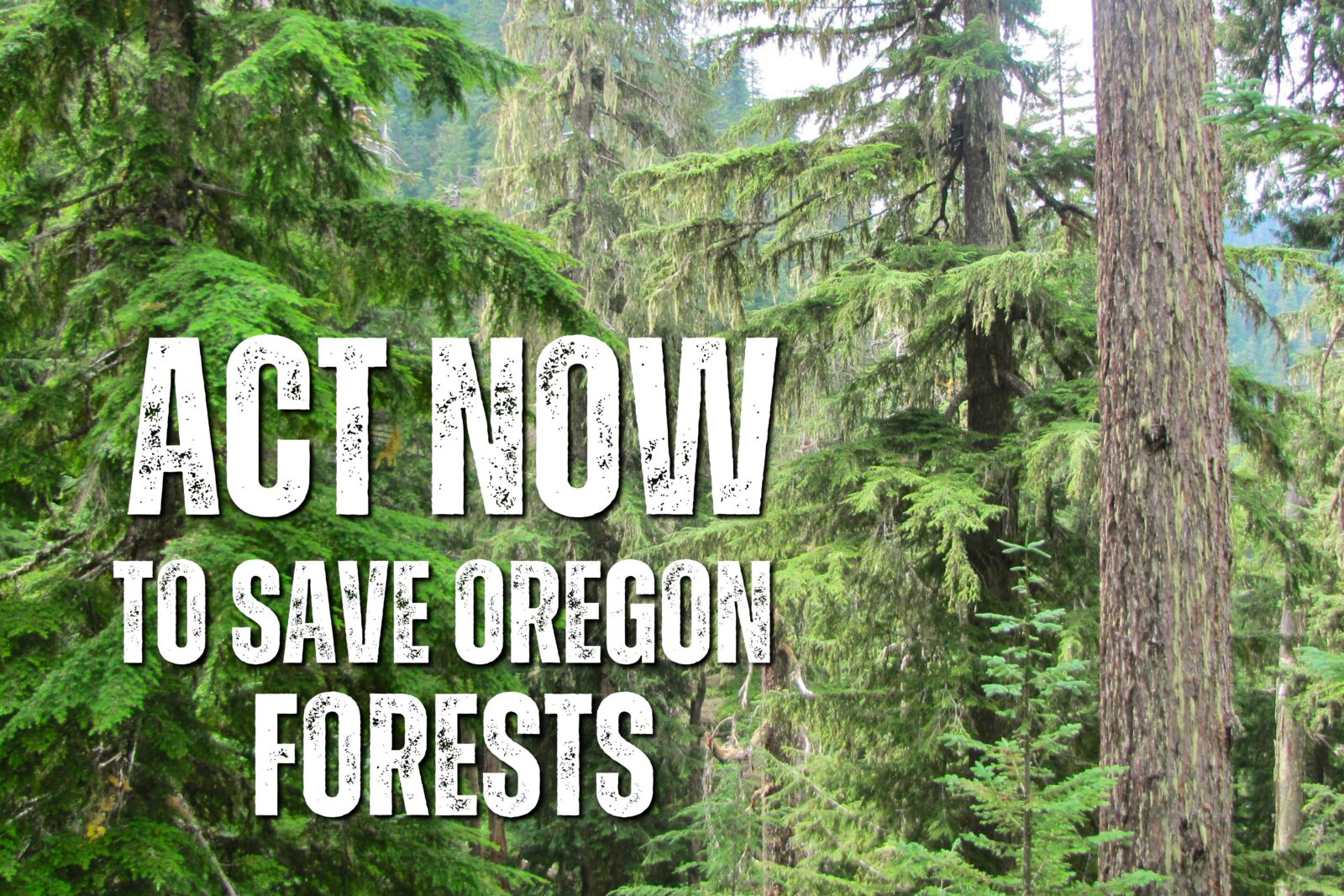
The Trump regime announced it will “revise” its plans that guide the management of the Bureau of Land Management’s 2.5 million acres of federal public lands in Western Oregon, including significant stands of mature and old-growth forests and the last refuge of the endangered northern spotted owl and marbled murrelet. The regime’s goal is clear: to pointlessly maximize “timber production” at the expense of long-standing and effective conservation strategies, and other scenic, recreation, endangered species, and habitat values.
We must do everything to prevent this ecological disaster. Since the BLM is holding no public meetings over this management sea change, we must submit comments in opposition in such overwhelming numbers by this Monday evening the 23rd at 9 p.m. that the matter becomes too much of a “porcupine” and the regime tables the plan and moves on to their next disaster. Areas at risk in Western Oregon include Alsea Falls, the Valley of the Giants, Mary’s Peak, and hundreds of intact stands of forest on Oregon and California Railroad (O&C) lands. Comments are only being accepted until 9 p.m. this Monday, March 23rd, so action must be taken RIGHT NOW. Please share this with your friends and family!
The Details
The Bureau of Land Management’s intention to open up millions of acres of forests in Western Oregon for “maximum” timber production to “advance Trump administration priorities,” including areas home to federally protected, vulnerable species like the northern spotted owl and marbled murrelet, demonstrate once and for all the gloves are off.
Nothing illustrates this destructive approach more clearly than Interior Secretary and oil executive Doug Burgum, and his clueless statement at the recent BlackRock Infrastructure Summit that we Americans who value conservation, wildlife, endangered species, biodiversity, and preserving the ecological integrity of our federal public lands aren’t “financially literate,” as though We the People don’t already make tough kitchen table decisions about money every day. Burgum and his oil, gas, and timber resource extraction cronies and oligarchal sheisters, who lavishly spend our tax dollars serving as apologists for industrial destruction will never understand the idea of the “public good,” or that the rest of us aren’t interested in private golf resorts and drive-in hunting preserves on privatized land dissecting habitat and wildlife corridors.
With six decades of American conservation in the crosshairs of a cabal that has made no secret of its hatred and hostility toward America’s outdoors and conservation legacy, we need you to submit remarks NOW to the Bureau of Land Management (BLM) by 9 p.m. on Monday, March 23rd. That’s not much time, so please share this page and tell your family and friends!
The hateful, oligarchic, billionaire class that controls our nation’s executive branch — including Burgum, Elon Musk, Peter Thiel, Steven Miller, Russell Vought, et al — despises the outdoors, loathes the idea of public lands held in trust for the American people and the public good, and anything less than the nihilistic destruction of the forests, species, ecosystems, and landscapes that otherwise make America great is not only unacceptable to them, but counterintuitive. They destroy because they’re incapable of understanding anything other than destruction and profit. Building and growing takes work and care. Leaving natural cycles and spaces alone takes maturity and restraint.
Notice of Intent
The Bureau of Land Management shared what’s called a notice of intent, in which surviving officials at the BLM not purged by DOGE or installed by the administration are proposing “new updates” to the Western Oregon Resource Management Plans that have governed logging and conservation on the BLM’s 2.5 million acres of forests in 17 Oregon counties for decades. They were last updated in 2016, and amazingly, left alone throughout Trump’s first term. The notice kicked off a monthlong public comment period that is ending this Monday the 23rd. That’s the hard deadline on the public comment period, and the agency has made it clear it “does not expect” to hold any public meetings in advance of releasing its proposal.
As Oregon Wild notes, “The stated goal for this for this proposal is to return to ‘maximum’ logging that ‘aligns with historically higher levels.’ In other words, a return to the days of clearcutting old growth and other forests at unsustainable levels that destroy fish and wildlife habitat, dirty streams, increase fire hazards, reduce resilience to climate change, and scar the hillsides that surround rural communities.”
Take Action Now
Copy, paste, and modify the message below as you see fit. Our friends at Oregon Wild shared this interactive map that can help you find threatened Oregon BLM lands you may know and love like Crabtree Valley, the Molalla River corridor and Table Mountain, Marys Peak, Alsea Falls, the Rogue River corridor, and sadly, many other areas. The Coast Range, Cascade foothills, and Siskiyou Mountains from Portland to Ashland — some of the most biologically productive lands in the Pacific Northwest — are all at risk, and all in the crosshairs.
Please send your email via the Bureau of Land Management webpage that fulfills National Environmental Policy Act (NEPA) requirements, or send the email directly to BLM_OR_Revision_Scoping@blm.gov and address it to Acting BLM Director Bill Groffy. You can also use this pre-formatted Oregon Wild action page.
The letter follows:
Dear Acting BLM Director Bill Groffy,
Please accept my comments on the proposed revision of the Bureau of Land Management Western Oregon Resource Management Plans.
The proposal notice suggests the sole need for this revision is to increase timber production levels through logging BLM forest lands. This is entirely unnecessary. There are already thousands upon thousands of acres of privately-owned and managed plantation forests throughout the Pacific Northwest and western U.S. that have more than adequately supplied timber resources for domestic needs AND international markets for decades — even before the advent of the Northwest Forest Plan in 1994.
Little if any timber inventory is needed from publicly-owned forests like those managed by the BLM, including the checkerboarded Oregon and California (O&C) Railroad lands, and few if any sawmills are in operation today that can process the wider, old-growth and mature trees that appear to be targeted by the administration with this unnecessary revision.
As you’re aware, the proposed action will reduce overall protections for these BLM-managed forests, including old-growth stands and other areas previously set aside for conservation. The revision also proposes shrinking logging streamside protections to less than 100 feet, a distance scientifically insufficient to protect endangered fish like coho salmon and steelhead, and a matter that has been thoroughly litigated and won by conservation interests over the last several decades.
This proposal will impact the forests my family, friends, neighbors, and I care about and value for far more than timber production. To that end, any management plan revision conducted by the BLM must do the following:
-
-
- Strengthen, rather than weaken, protections for old-growth trees, stands, and riparian areas.
- Preserve and enable MORE old-growth by protecting mature trees and stands.
- Not expand clearcut-type logging practices that reduce carbon storage and vital wildlife habitat.
- Close loopholes that exist in the current management plans that result in ongoing loss of habitat for imperiled species.
- Ensure that management of these public forests that belong to the American people do not increase fire hazards, increase the spread of invasive weeds, or cause damage and erosion to soil.
- Not allow for more road-building, but instead close and decommission unneeded roads to protect water quality and reduce wildlife risks and ignitions.
- Exercise authority and discretion to conserve and protect these forests consistent with federal court decisions.
- Maintain and strengthen protections for all existing Areas of Critical Environmental Concern (ACECs).
- Meaningfully engage tribal governments and Indigenous communities to ensure their interests are considered.
-
In short, the proposed plan revision would double down on the most destructive aspects of public lands management across even more of our American public lands landscape, further prioritize resource extraction over the long-term health of our forests and communities, and put wildlife habitat, salmon recovery, drinking water, and nearby communities at even greater and more unnecessary risk.
Sensible and effective conservation management since the advent the Northwest Forest Plan in 1994 has largely resulted in a state of positive recovery for both forests and species, and environmental stability and consistent property value for homeowners and communities that have long lived alongside O&C and other BLM-managed lands.
Professionals with the Bureau of Land Management know these destructive proposals will harm our otherwise manageable, current environmental state in Oregon and around the west. Given that there is zero demonstrated economic, scientific, or conservation need for this pointless revision, it will result in abject, extinction-level destruction, along with decades of resulting litigation.
I urge you and the BLM to reconsider this damaging, destructive proposal.
Thank you for your consideration.
Sincerely,
[ your name ]
Don’t wait! Copy, paste, modify, and send this email NOW.
Photos and graphics © 2026 Tommy Hough all rights reserved.


